
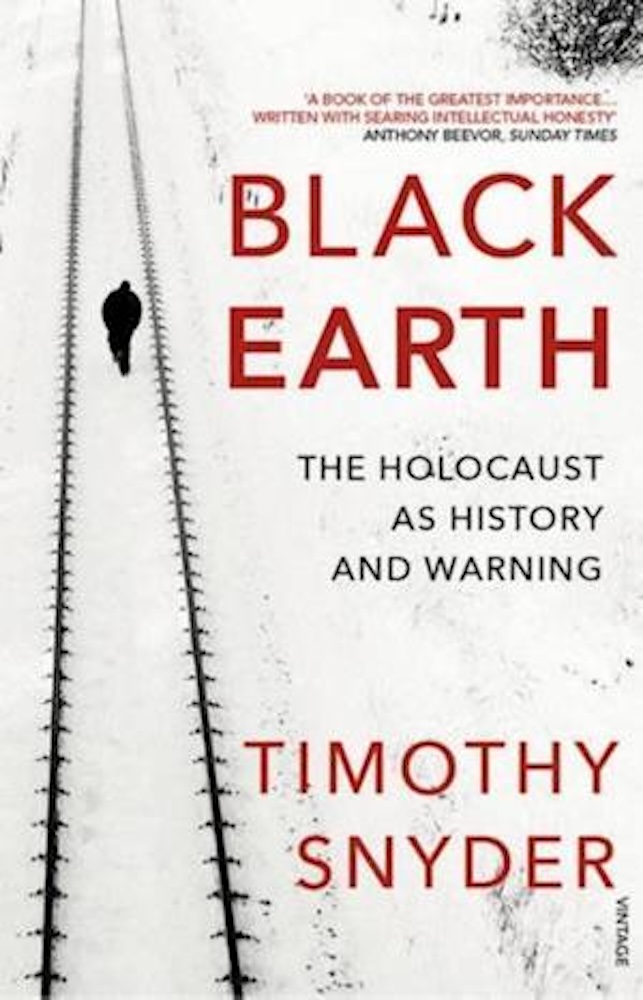
My version: Paperback
Genre:Non Fiction
Publisher:Vintage, Penguin Randon House
First published: 2016
ISBN:978-1-784-70148-2
Pages:344 (plus acknowledgements, notes, a note on usages. archives and abbreviations, published sources, index)
Bought
From the cover:
The Holocaust began in Hitler’s mind.
Eliminating Jews, he believed, would unleash the racial struggle that would allow Germans to win desperately needed resources. It comforts us to believe that the Holocaust was a unique event. Yet by overlooking its lessons we have endangered the future. As ideological and environmental challenges to the world order mount, our societies are more vulnerable than we would like to admit.
Black Earth is a pioneering, absorbing exploration of the ideas and politics that enabled the Nazi extermination of the Jews. It makes the Holocaust intelligible and all the more terrifying – an unprecidented crime revealed not only as history but warning.
Black Earth: The Holocaust as History and Warning is a groundbreaking and important work of history that offers a new understanding of the Holocaust and its implications for our world today. It’s about the conditions that allowed the Holocaust to be proposed and then happen. It is a well-written and convincingly argued, really excellent book, that only gets better the more you think about what he is saying and read other books on the Second World War in the east, and see even more clearly how he reached his observations.
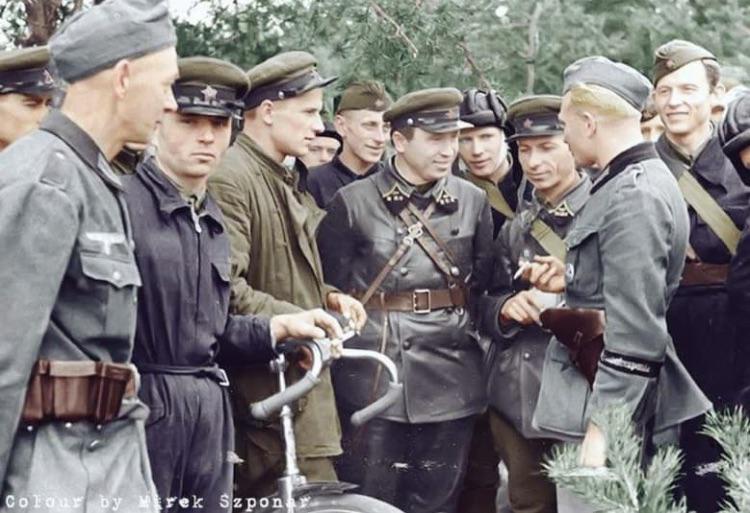
He is, in effect, trying to make some sense, some order, out of what happened from 1933 onwards to the Jews. But in the first instance of course, to the Polish people – from Germany on one side and from The Soviet Union on the other. He emerges with an insightful theory of why what happened, happened. And, dare I say it, confirms my feeling while reading (and reviewing) Christopher Browning’s Ordinary Men, that what they were able to convince themselves should be done ‘over there’ happened because they were over there, not in Germany, and so not subject to what would have been their normal societal restraints.
if I’ve understood it correctly, it’s the view that what went on, especially in Poland, was because all normal rules were thrown out by both Germany and Russia, due to neither of them in reality, recognising Poland’s right to esist. And if it didn’t exist, there was no law to follow, because it didn’t exist. So anything could be done without fear of consequences in a land that didn’t exist. Once that ball got rolling, and Germany subsequently attacked The Soviet Union, they continued the behaviour and the Soviets joined the Polse as non-people, as less than human. Snyder argues that the Holocaust was not just a product of antisemitism, but also of the collapse of state power in Eastern Europe. He shows how the Nazis were able to exploit this collapse to then carry out their genocide against the Jews.
Black Earth is particularly relevant today, as we are witnessing a rise in both nationalism and xenophobia in mny countries. Black Earth is a reminder that we must never take democracy for granted, and that we must always be vigilant against the forces of hatred and intolerance. Snyder argues that the Holocaust is not just a distant event, but a warning about the dangers of state collapse and the importance of defending democracy. He writes:
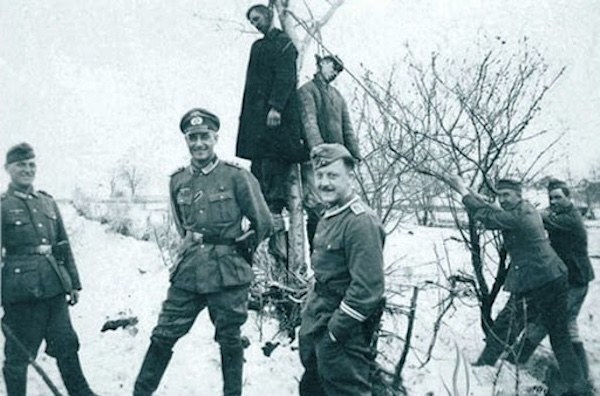
“The Holocaust was a product of modernity, not a medieval atavism. It was the outcome of a political ideology that was based on the idea of racial purity and that used modern technology and bureaucracy to carry out its genocidal goals.”
There are some obvious references also to Christopher R. Browning’s misguided (in my optic) opinions of the ordinary German’s capacity to murder, in cold blood, in the tens of thousands. For example, P179:
“It was already known that Einsatzgruppen could kill tens of thousands of people in cold blood; this they had done to Polish citizens in 1939. It was learned in 1941 that other Germans, with less training and weaker ideological preparation, could also kill in the tens of thousands. It transpired after June 1941 that almost every German who was ordered to shoot a civilian, Jewish or otherwise , would obey that order – even though asking to be spared from such duties brought no consequences beyond peer pressure.”
That to me would seem to be a fairly obvious reference to the behaviour of Ordinary Men‘s Police Batalion 101.
(A lot of this idea is also backed up by the excellent Hitler’s Willing Executioners, which will be the subject a later review… I bet you can hardly wait).
His opinion is that the Holocaust was not inevitable. He shows how the Nazis were initially hesitant to carry out mass murder, and how they were only able to do so because of the collapse of state power in Eastern Europe. Snyder also challenges the view that the Holocaust was a purely German phenomenon. He shows how local collaborators played a key role in the genocide, and how the Nazis were able to exploit the antisemitism that was already present in many Eastern European societies (including Poland). He then argues that the Holocaust was not just a product of antisemitism, but also of a broader ideology of racial purity. He shows how the Nazis saw the Jews as part of a larger group of “undesirables” that included Slavs, Roma, and homosexuals. He is in effect looking anew at something we thought we had all figured out. Writing about Auschwitz.
“Auschwitz symbolises the intention to murder all Jews under German control, and Jews from every corner of the German empire were murdered in its gas chambers. Some Jews survived Auschwitz because it remained, to the end, a set of camps as well as a death facility, where Jews were selected for labour as they entered. Thus a story of survival at Auschwitz can enter the collective memory. Almost literally no Jew who stood at the edge of a death pit survived, and almost literally no Jew who entered Treblinka or Belzec or Sobibor or Chelmno survived . The word “Auschwitz” has become a metonym for the Holocaust as a whole. Yet the vast majority of Jews had already been murdered, further east, by the time that Auschwitz became a major killing facility. Yet while Auschwitz has been remembered, most of the Holocaust has been largely forgotten.”
Snyder’s book is based on extensive research in archives in Eastern Europe, and he uses this new evidence to, as above, challenge some of the traditional interpretations of the Holocaust. He argues that the Nazis did not decide to exterminate the Jews until after they had invaded the Soviet Union in 1941. Further smashing the often thought idea that the whole thing was planned in advanced and events followed that plan. It developed as circumstances allowed and fed off the prevalent antisemitism that already existed and was stirred up as it progressed. There was no shortage of willing executioners, both in German society and among the ‘local’ collaborators in the conquered lands.

Black Earth has been rightly praised by historians for its original insights and its comprehensive coverage of the Holocaust. It has also been praised by general readers for its powerful and sometimes disturbing narrative.
Without doubt, it is an essential read for anyone who wants to understand the Holocaust and its implications for our world today. Well worth reading no matter what your interest, or level of interest in the Second World War (especially on the Eastern front) is. And, as I say, one that only gets better and makes even more sense the more of other World War II books you read.

 Couldn't I Just Tell You