

Jason Bourne 2
My version: Paperback
Genre: Fiction, thriller
Publisher: Orion Books
First published: 1986
ISBN: 978-1-4091-1770-4
Pages: 673
Bought
From the cover:
Someone has stolen Jason Bourne’s identity. Now he wants it back.
Terror is sweeping the globe. A world leader has been brutally murdered by a legendary assassin. But was Jason Bourne really the killer?
Who is using Bourne’s name? Who is paying him?
Bourne must take back his identity and utilise all his skills as he is plunged into a dangerous world once more. Survival is not enough. Bourne has to stop the imposter – or the world will pay a devastating price.
Anyone coming to the books after seeing the films, is probably in for a bit of a surprise. Apart from the title and the Jason Bourne character, they are in effect two completely different stories, linked only by the premise of the first book, that Bourne has at somepoint had his memory wiped. He doesn’t really know who he is, what he did, or what he’s going to do, but he is still able to summon al the skills – deception, fighting, etc – from his previous life.
That having been said…
The Bourne Supremacy is without doubt a masterpiece of suspense and intrigue, blending action, mystery, and psychological depth – as only Robert Ludlum can. From the very first page, Ludlum pulls us into a world where nothing is as it seems, and trust is a luxury no one can afford. The novel’s relentless pacing and intricate plot twists kept me on edge the whole time, as Jason Bourne navigated a labyrinth of deception, memory loss, and high-stakes espionage. Ludlum’s ability to craft a narrative that feels both urgent and meticulously layered is nothing short of brilliant, making this book a standout in the spy thriller genre.
Probably what sets The Bourne Supremacy apart (from most other fast, action-based thrillers) is its exploration of identity and survival. Bourne’s struggle to piece together his fractured past while evading deadly adversaries is as compelling as it is thought-provoking. Ludlum doesn’t just deliver heart-pounding action; he delves into the psychological toll of a life defined by secrets and danger. The characters are richly drawn, with Bourne’s internal conflict serving as the emotional core of the story. Even the supporting cast – allies and antagonists alike—are imbued with depth, making their motivations and actions feel authentic and gripping.
Beyond its gripping narrative, The Bourne Supremacy excels in its atmospheric storytelling. Ludlum’s vivid descriptions transport readers to exotic locations, from the bustling streets of Hong Kong to the shadowy corners of Europe, each setting dripping with tension and intrigue. The book’s themes of betrayal, resilience, and the search for truth resonate long after the final page. Whether you’re a fan of spy novels or simply love a well-crafted thriller, this book delivers on all fronts, leaving you eager to dive into the next chapter of Bourne’s journey.
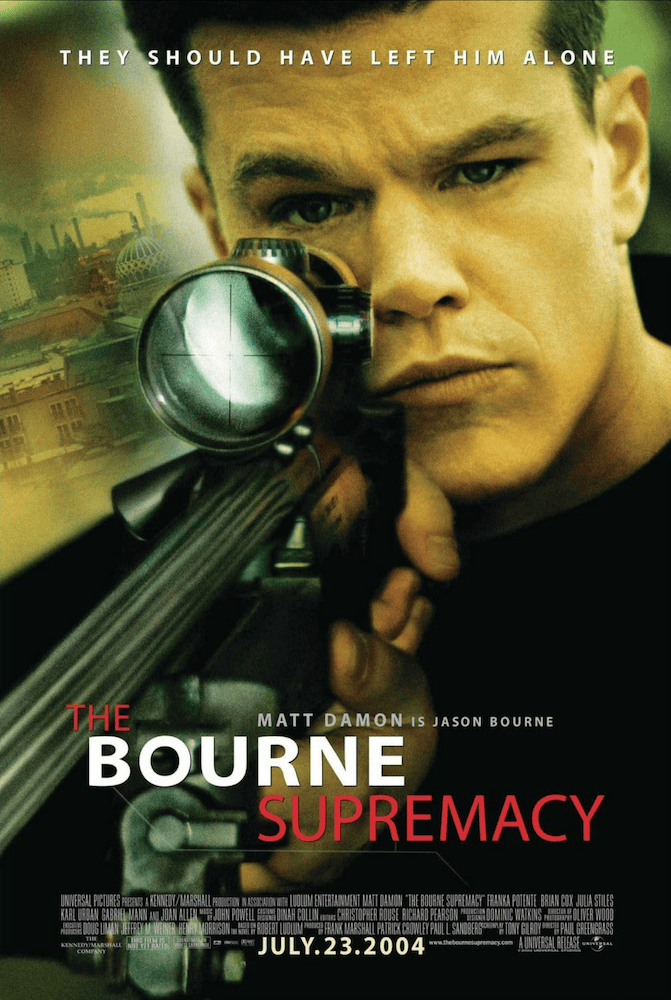
The Bourne Supremacy book (1986) by Robert Ludlum and the film (2004) directed by Paul Greengrass diverge significantly in plot, characters, and tone, despite sharing the same title and protagonist. In case you were wondering what the main differences are, I know you aren’t, but here are the main differences anyway:
Plot and story
BOOK: The novel follows Jason Bourne as he investigates the murder of his wife, Marie, in a small New England town. The story then revolves around Bourne as he uncovers a conspiracy involving a secretive U.S. government operation called Medusa, which seems linked to his past covert operations. The narrative is more introspective (than the film), concentrating on Bourne’s psychological struggle with his fragmented memory and the moral dilemma he faces.
FILM: The film picks up where The Bourne Identity left off, with Bourne and Marie living in India. After Marie is killed in a botched assassination attempt on Bourne, he sets off on a mission to uncover the truth behind her death. The film then centres on Operation Blackbriar, A CIA black ops programme, and Bourne’s quest to expose the corruption within the agency. The story is somewhat more action-based with chase sequences and perhaps more of a focus on Bourne’s physical prowess.
Characters
BOOK: Bourne’s wife, Marie, is already deceased at the start if the novel, and her death becomes the catalyst for the plot from there on. The book introduces new characters such as Peter and Susan Web, a couple who help Bourne, and Carlos the Jackal, the ‘legendary assassin‘ of the book’s back blurb. The Jackal plays a major role in the conspiracy Bourne uncovers. Bourne’s internal monomlogue and relationships are developed, with a stronger emphasis on his emotional rollercoaster ride.
FILM: Marie is alive at the beginning of the film, but is killed early on. This serves as Bourne’s primary motivation from that point. The film keeps characters previously introduced, like Nicky Parsons (a CIA agent) and Ward Abbot (a high ranking CIA official). But their roles and backstory differ from the book. In the film, we are also introduced to Pamela Landy, a CIA deputy direcotr who becomes perhaps the key figure in Bourne’s hunt for the truth. The relationship between Bourne and the other characters is certainly more adversarial and action-driven.
Themes
BOOK: The novel is firmly rooted in the COld War, with a slowe and more methodical pace (than the film). It looks at themes of identity, betrayal and of course the moral cost of espionage, with Bourne often reflecting on his past and the ethical implications of his action. Ludlum as John le Carré? The tone is darker (than the film), more introspective, with a focus on creating psychological tension.
FILM: Is a modern action-thriller. Brings the book kicking and screaming into the 21st century. Perhaps firstnoted for th hand-held camera work, putting you right next to Bourne as he rushes through India, Europe, the USA. Gives a much more visceral tone, immediate and with less emphasis on Bourne’s internal struggles. They’re still there, but he has returned more or less to the consummate agent he obviously was in a previous life and the film concentrates on the external threats he faces.
Ending and resolution
(Perhaps look away here)
BOOK: The novel ends with Bourne uncovering the truth about Medusa and about his own past. Which leads to a confrontation with Carlos the Jackal. Pwerhaps Ludlum wanted to assure American readers that with the right agents, the CIA could easily take down even this mythical assassin. I don’t know. CtJ does, in my mind, seem rather unnecessary (unnecessarily well-known for NOT having been caught) a character to have in the books, but there we are. The finale is more cerebral, as books can be over films, with Bourne outsmarting his enemies through strategy and intelligence.
FILM: Ends with Bourne exposing Operation Blackbriar and confronting the CIA officials responsible for his wife’s death (if they were married?). The climax is more action-packed than the book, leaves the stage open and sets up the third film.
You can buy The Bourne Supremacy by Rober Ludlum from Amazon
*The cover image I’ve used, is of the paperback version I have. It seems they’ve up-dated the covers yet again…they always do this just when you’re about to get them all in one particular style. Only the Lee Child / Jack Reacher paperbacks seem to have remained consistent…anyway, don’t go thinking you’re gonna be getting the ‘black’ version if you clisk on the link(s)


