
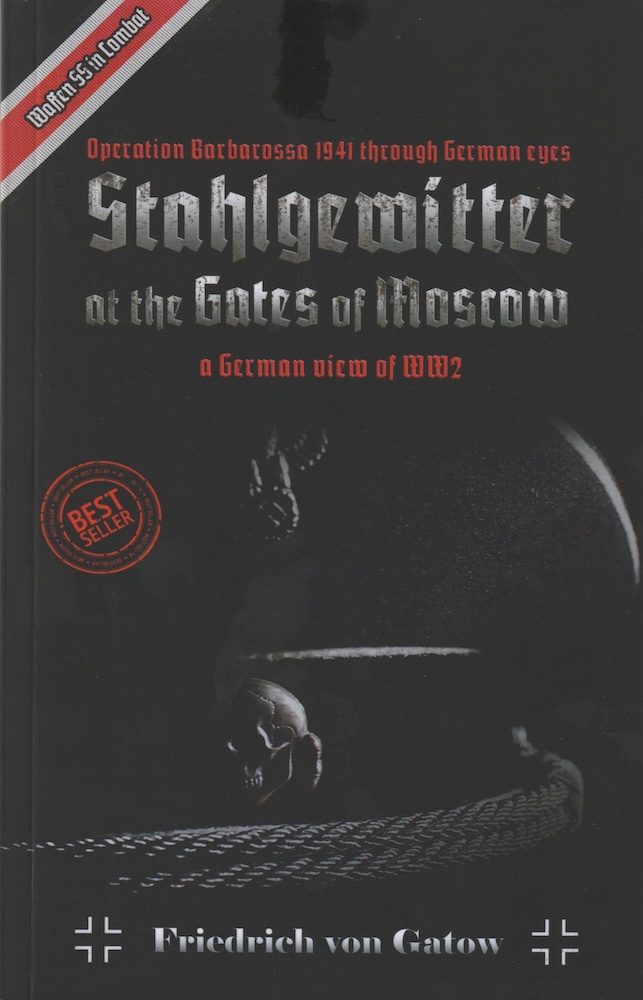
Operation Barbarossa 1941 through German eyes. Waffen SS in combat
My version: Paperback
Genre: Non Fiction, World War II, , Barbarossa, Moscow
Publisher: Self Published
First published: 2019
ISBN: 9781794205888
Pages: 124
Bought
From the cover:
“The German Army Group Center achieved an overwhelming tactical victory during the twin battles at Bryansk and Vyazma during the first half of October 1941. It remained to be seen during the following weeks if it could be expanded operatively and bring forth the crowning result of Moscow’s capture. The impact it left upon the Russians was great at any rate. The city’s inhabitants who had remained and were able to perform manual labour began to construct defensives in the city’s suburbs.
Then suddenly, and especially early during the year, the winter came and along with it terrible cold temperatures. German operations ended abruptly. The engines and even automatic weapons froze up. In no way were their uniforms sufficient in these biting cold temperatures, which went as far down as minus forty-five degrees Celcius. Appropriate clothing, which were field-tested and found sufficient for the Russian winter, were not yet available. Only the Luftwaffe and the Waffen-SS were to some extent better prepared.
The Soviet leaders seemed to have waited just for this most favourable event, where the German attacking strength would be exhausted and where the climate conditions would allow them to play out their trumps.”
An odd little one this. Written by an enthusiastic amateur, he says ‘retired,’ though not what from. The book is, if I understand it correctly, based on his father’s experiences in the German Army, presumably on the east front and the Moscow offensive, and with some of his own artistic license.
There’s no getting away from it, he’s not a professional writer, and I’d be 99% certain that English isn’t his first language. The whole thing looks like it was possibly written in German, then Google Translated to English, but without a native English speaker giving it a run-through. However, those points aside, it is very readable, some interesting characters amongst the soldiers he’s describing and an intriguing glimpse – if true – at the German’s failed offensive towards Moscow. The harsh conditions, and the make-do and mend mentality that developed, along with the constant attacks from seemingly always fresh Soviet troops, almost (almost) makes you feel sorry for the German troops’ suffering.
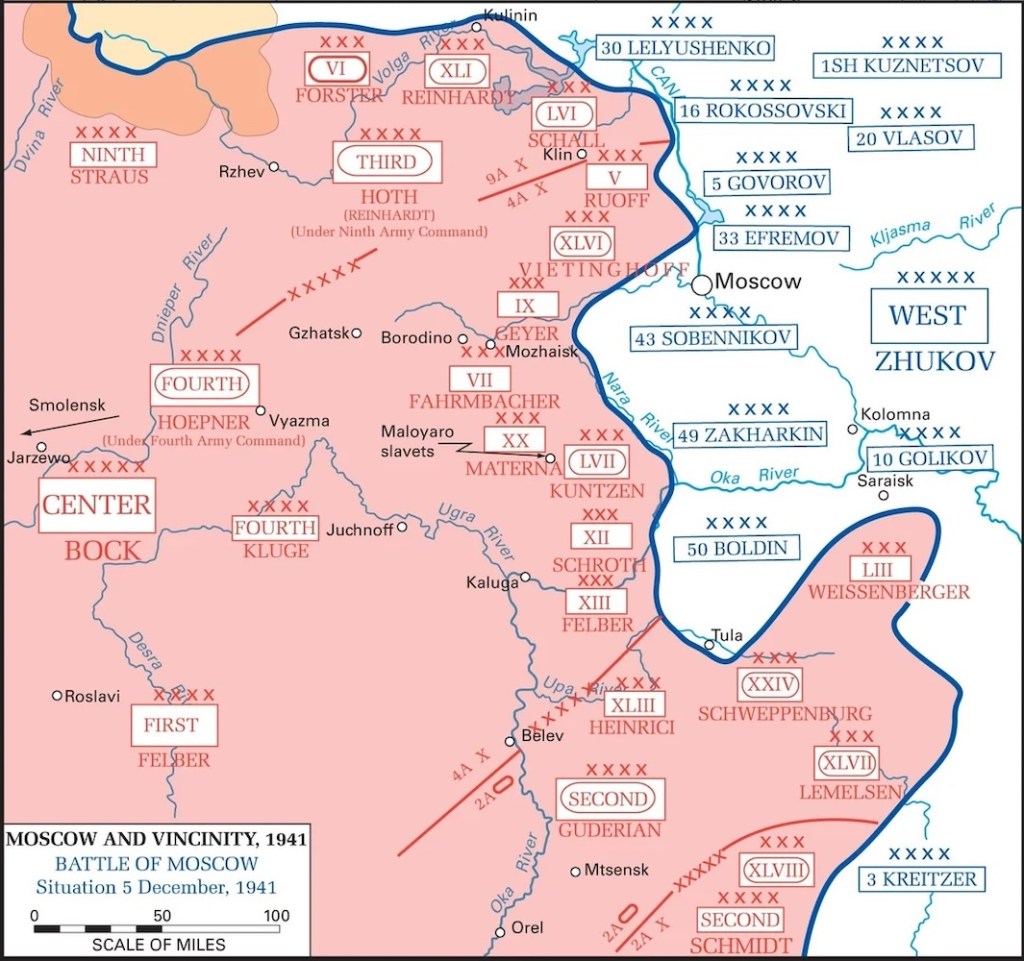
In Stahlgewitter, they get as far as being able to see the towers in the city of Moscow, before having to retreat, form up, dig in, retreat again, dig in, retreat again and again.
Why? Unprepared, really. They thought it would all be over before the winter kicked in, so didn’t have much of the appropriate clothing, nor had they taken the appropriate precautions, with respect to their equipment. They were also a little delayed, from the original Barbarossa timetable, even though the initial stages went quicker than expected, by deciding to quell an uprising in Yugoslavia before setting off.
How different things might have been if Moscow had been captured, along with Stalin who had stayed in the city. He was hiding in a Dacha near by in shock, I think. Maybe there would have been others to step forward, maybe not. Stalin had in any eventuality, seen to it that there was no one to challenge his leadership, so no one to take over if he was executed by the Germans. Maybe the shifting of the Russian industrial infrastructure further east would not have made as much of a difference as it did in the ‘real’ war. Maybe the German supply lines were too over stretched, whatever the outcome of the attack on Moscow. There’s no doubting though, the psychological lift it would have given the Germans and the psychological lussing it would have given the Russians.
Here are some facts about what really happened.
The German attack on Moscow, known as Operation Typhoon, was a critical military campaign during World War II that took place from October to December 1941 during the Nazi invasion of the Soviet Union (Operation Barbarossa). Here are the key details:
Initial Stages. The German Wehrmacht launched a massive offensive to capture Moscow, the Soviet capital, in early October 1941. This was the culmination of a rapid advance that had already pushed deep into Soviet territory, with German forces having conquered vast areas of Ukraine and Belarus.
German Forces. The Germans committed around 1 million soldiers, 1,700 tanks, and 950 aircraft to the attack. They were led by Field Marshal Fedor von Bock and believed that capturing Moscow would decisively defeat the Soviet Union.
Soviet Defense. The Soviet defenders, initially disorganized and suffering massive losses earlier in the invasion, were now more organized. They were led by General Georgy Zhukov, who implemented a strategic defense of the city.
Harsh Winter Conditions. One of the most significant factors was the brutal Russian winter. German troops were ill-prepared for the extreme cold, lacking proper winter clothing and equipment. Temperatures dropped to -40°C (-40°F), causing significant problems for the German military.
Soviet Counteroffensive. On December 5, 1941, the Soviets launched a massive counteroffensive. They had mobilized fresh troops from Siberia and the Far East, who were accustomed to winter warfare and equipped for cold conditions.
Outcome. The German attack ultimately failed. They were pushed back from Moscow, suffering significant casualties and experiencing their first major defeat in the war. This marked a turning point in World War II, demonstrating that the Soviet Union could not be quickly defeated and would resist fiercely.
The failure to capture Moscow was a critical moment in World War II. It shattered the myth of German military invincibility, prevented the immediate collapse of the Soviet Union, and set the stage for the eventual Soviet counteroffensive that would push Germany back across Eastern Europe.
You can buy Stahlgewitter at the Gates of Moscow by Friedrich von Gatow from Amazon
*The header image has used WordPress’ AI of course


